
Pier & Beam Foundation Repair in Corpus Christi
When a raised house starts dipping, bouncing or smelling damp, the problem is usually visible underneath. We get into the crawl space, find the pier, beam, joist or moisture issue causing it, and explain the repair without dressing it up.
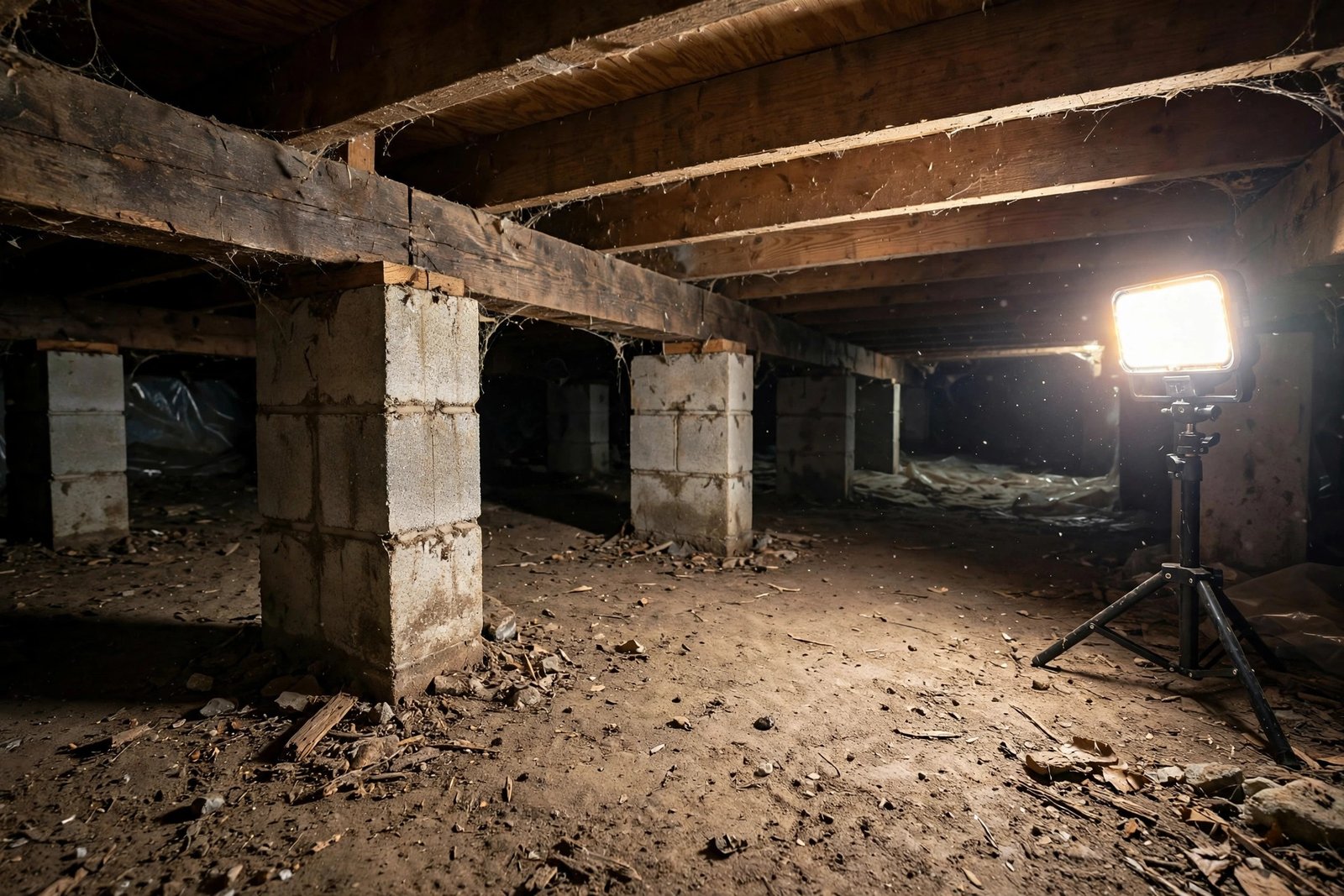
How a pier & beam foundation actually works
Your floor does not sit directly on the ground. The floor joists carry the rooms, the beams carry the joists, and the piers carry the beams down to the soil. Shims between the pier and beam make the final height adjustment.
When one part settles or weakens, the floor above tells on it. A low pier creates a dip. A soft joist gives you bounce. Rot at a beam end can pull an entire room out of level. That is why we inspect the whole support path before lifting anything.
- Piers must be sound, upright and properly supported.
- Beams and joists must be solid—not hidden by fresh shims.
- The crawl space must stay dry enough for the repair to last.
What a struggling raised foundation feels like
These signs do not all mean the same repair, but they do tell us where to start looking.
Sagging or bouncy floors
A smooth slope often points to settlement. A soft, springy patch can mean a weakened joist or subfloor. We check the framing directly below the trouble spot.
Musty crawl-space smell
That odor is a moisture warning. Gulf humidity, plumbing drips and poor drainage can keep wood damp long enough for rot and mold to take hold.
Doors that rub or will not latch
When the floor system drops unevenly, the wall above can rack out of square. Doors and windows usually notice before the homeowner sees a structural crack.
Cracked, leaning or loose piers
In the crawl space, look for crumbling blocks, tilted supports, washed-out soil, crushed shims or daylight between a pier and the beam it should carry.
One important distinction: a few new shims can correct height only when the pier and wood above it are still sound. Shimming rotten framing or a failing pier hides the symptom and leaves the failure in place.
Our pier & beam repair process
We work from diagnosis to support to moisture. The order matters.
Crawl-space inspection
We map floor elevations, then inspect the piers, shims, beams and joists below. We also trace water stains, soft soil and rot back to their source.
Controlled lift & adjustment
Low areas are raised gradually. Sound piers get properly fitted shims; damaged or unstable piers are rebuilt rather than stacked higher.
Beam & joist repair
Weak wood is sistered when enough solid material remains. Rotted sections that cannot carry the load are replaced with correctly sized framing.
Moisture control
We address the reason the crawl space stayed wet—drainage, grading, plumbing or ventilation—so new lumber and supports are not put back into the same problem.
Moisture affects the wood. Wet-dry soil movement affects the piers. A lasting plan checks both.
Why pier & beam homes struggle in Corpus Christi
After years around raised homes here, the pattern is familiar: our clay moves and our air stays wet. Older homes around Downtown and North Beach have also been through years of storm water, plumbing changes, additions and repairs done by different hands.
Pier & beam repair questions
Can you level a pier & beam house without damaging it?
Usually, yes—but slowly. We lift in small, controlled stages and watch how the framing, doors and finishes respond. The goal is stable and reasonably level, not forcing an older house to a perfect number it has never held.
Does every sagging floor mean the piers have settled?
No. A dip can come from a low pier, a weak beam, a damaged joist or a combination of all three. That is why we inspect the crawl space directly under the symptom before recommending a lift.
When is shimming enough, and when is it not?
Shimming is appropriate when the pier is sound and only the final height needs correction. It is not a repair for a cracked pier, soft footing, leaning support or rotten beam. Those failures have to be rebuilt or repaired first.
What causes wood rot under a Corpus Christi home?
Common causes are plumbing leaks, water draining toward the house, standing water after storms, blocked crawl-space airflow and long exposure to Gulf humidity. We look for the source, not just the damaged board.
How long does pier & beam foundation repair take?
It depends on access and how much support or framing has failed. Straightforward adjustments can move quickly; rebuilding piers or replacing beams and joists takes longer. After inspection, the repair plan should spell out the scope and expected sequence.
If the floor feels wrong, let’s look underneath it.
Tell us what you are noticing. We will inspect the crawl space, show you what is carrying the house, and explain what needs repair—and what does not.
Related foundation services
The right repair depends on the foundation type, the soil movement and where the water is going.