
Water control for Coastal Bend homes
Foundation Drainage & Waterproofing in Corpus Christi
Water is the first thing I check when a Corpus Christi foundation starts moving. After years around these homes, I’ve learned that a good drain often prevents the repair a homeowner was afraid of. We build practical systems that move Gulf rain away, keep crawl spaces drier, and stop wet soil from beating on the foundation.
Start with the cause
Why water is hard on a foundation
Concrete looks solid, but it is only as dependable as the soil holding it up. Around Corpus Christi, that soil changes when its moisture changes.
After a hard rain, clay takes on water and expands. During a dry stretch, it tightens and pulls back. If one side of the house stays wet while another side dries, the soil does not move evenly. That is when floors slope, doors rub, and cracks begin to open.
Water can also carry the finer soil away from a slab edge, soften the ground below pier blocks, and leave damp air under a raised house. Waterproofing can block moisture from entering the structure, but it cannot replace drainage. First we give the water somewhere better to go.
Four signs the lot is not draining well
You do not need special equipment to spot the first clues. Walk the property after a steady rain and pay attention to what is still wet the next day.
Water pools by the slab
Puddles sitting along the foundation mean the grade is low or water has no clear path out. Dark soil lines on the concrete usually show where it keeps happening.
The yard stays soggy
Soft ground days after the rain has stopped can point to a low area, buried water flow, or a high water table. If your shoes sink, the foundation support may be staying wet too.
The crawl space is damp
Wet soil, musty air, sweating ducts, or dark wood under a pier-and-beam home tell us moisture is getting trapped below the floor instead of leaving the lot.
Soil is washing away
Channels in the yard, exposed slab edges, or gaps under walkways show fast-moving water is carrying support soil with it. That loss tends to grow with every storm.
Drainage solutions matched to the water
There is no single drain for every yard. We look at where the water comes from, whether it is moving above or below ground, and where the lot can discharge it without sending the problem next door.
French drains
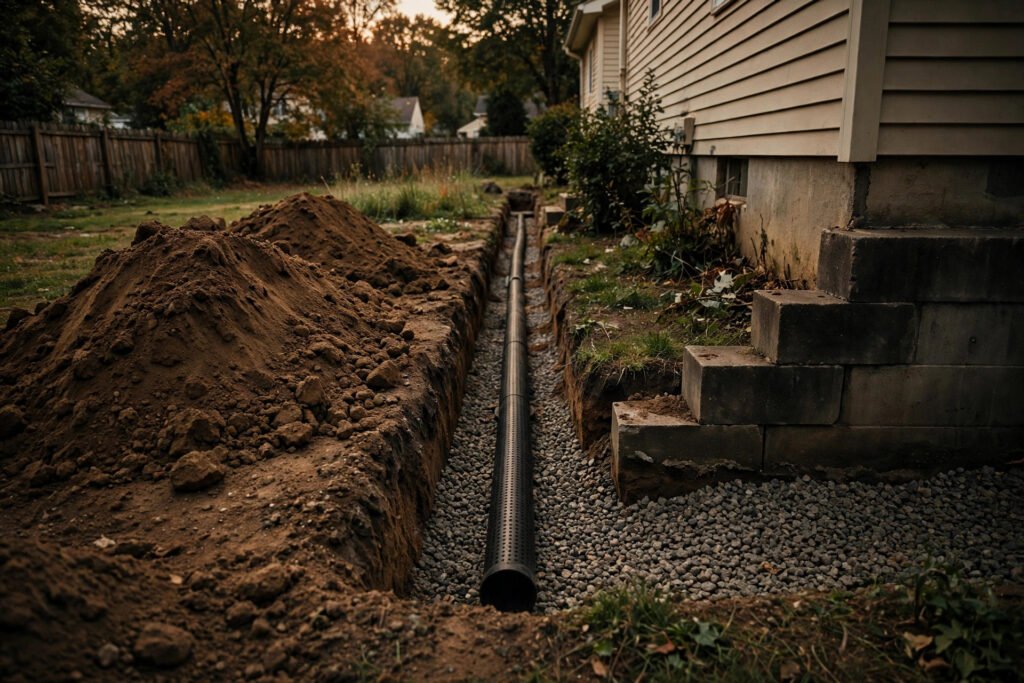
A perforated pipe set in washed stone gathers water moving through the soil and carries it toward a proper outlet. We use filter fabric, continuous fall, and service access so the system keeps working instead of filling with silt.
Surface grading
For rain running across the top of the yard, the ground needs to fall away from the house. We correct low beds, build gentle swales, and shape the surface so water moves around the foundation rather than stopping against it.
Downspout extensions
A roof concentrates a lot of rain into a few downspouts. Short elbows that empty beside the slab put that water in the worst possible place. Extensions or solid drain lines carry it farther out before it can soak the foundation soil.
Waterproofing
When moisture is reaching a crawl space or foundation surface, membranes and moisture barriers create a physical break. We use waterproofing with drainage, not instead of it—the barrier stops entry while the drain reduces the water pushing against it.
Built for local conditions
Drainage in Corpus Christi is its own kind of job
Our lots do not always give water much help. A plan that works on a steep inland property can fail quickly on a flat Coastal Bend yard.
Gulf downpours arrive fast
A light-rain fix may look fine until a storm drops water faster than the yard can absorb it. We size the collection points and outlets for the kind of concentrated rain we actually get here.
Flat lots need deliberate fall
On a nearly level property, an inch matters. Pipe laid too flat holds sediment. A swale without enough slope becomes another puddle. We check elevation before deciding where a drain should run.
High groundwater changes the answer
Some yards stay wet even when surface grading looks right. That tells us water may be moving through the soil. In those cases, subsurface drainage can matter more than adding another surface inlet.
Clay needs consistent moisture
The goal is not bone-dry soil. It is fewer hard swings between soaked and shrunken. Moving roof and storm water away helps keep the moisture around the foundation more even from one side of the house to the other.
Foundation drainage questions
Straight answers to the questions homeowners usually ask while we are standing in the yard.
Do I need a French drain or just better grading?
If rain is running across the surface and collecting by the house, grading or a shallow swale may be enough. If the surface looks right but the soil stays wet for days, the water may be moving underground and a French drain makes more sense. Many flat lots need a combination of both.
Where should downspout water go?
Far enough from the foundation that it cannot roll right back, and toward a legal discharge point that does not flood a neighbor. The exact route depends on the lot. The important part is a solid line with steady fall—not a loose extension ending in another low spot.
Will drainage repair close my foundation cracks?
Drainage can slow or stop moisture-driven movement, but it does not erase damage that has already happened. A stable cosmetic crack can be patched after the cause is controlled. A house that has already settled out of level may still need structural repair.
Can waterproofing alone fix water in my crawl space?
Not if outside water is still collecting under or beside the house. A barrier is useful, but it should not be asked to hold back a drainage problem forever. We first reduce the amount of water reaching the crawl space, then use a ground barrier or membrane where it adds protection.
How do you know where the drain can empty?
We follow the elevations across the lot and identify an outlet that will keep flowing during heavy rain. That may be daylight at a lower part of the property or another approved drainage path. If there is no dependable gravity outlet, we explain the alternatives before any trench is opened.
Let’s find where the water is coming from—and where it should go
We’ll walk the lot, check the foundation edge and downspouts, and explain which drainage work is useful before talking about structural repairs.