
Structural support below the moving clay
Foundation Piers & Pilings in Corpus Christi
When one side of a house keeps dropping, patching the crack is not a repair. Piers carry that weight below the unstable clay and onto soil that can hold it. After years around Corpus Christi foundations, I can tell you this: the right system depends on the ground, the load, and how far the settlement has gone.
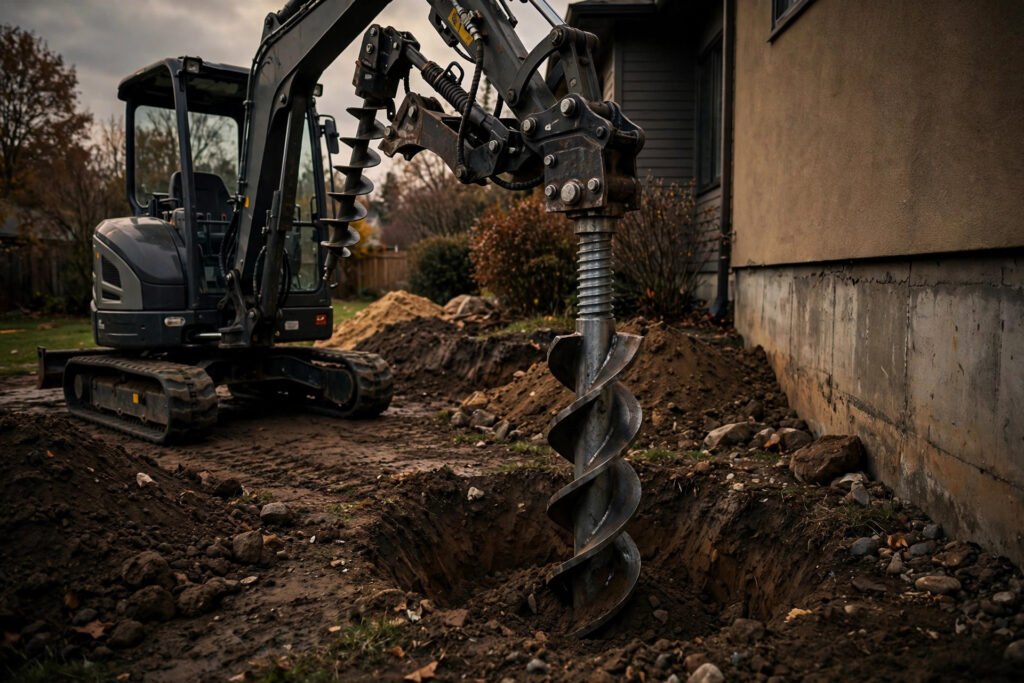
The repair, in plain language
What piers and pilings actually do
Your foundation is only as steady as the soil carrying it. Around Corpus Christi, the upper clay can expand after rain and pull back during dry weather. If one area moves more than another, that section of the house settles.
A pier is a deep support. We place it beside the foundation and take it down through the active clay until the system reaches soil with enough resistance to carry the load. A steel bracket connects the pier to the foundation. The weak ground is no longer doing the important work.
Steel push piers
Hydraulically driven sections that suit heavier structures and deeper load-bearing soil. The structure supplies the reaction force as the pier advances.
Helical piers
Screw-like steel shafts installed by measured torque. They fit lighter loads, additions, new construction, and locations where access is tight.
Piers are not the answer to every crack. If drainage, a plumbing leak, or a small stable crack is the real problem, we deal with that cause instead of selling deep support the house does not need.
When deep support makes sense
Signs your home may need piers
One symptom by itself does not settle the diagnosis. What matters is the pattern: several signs pointing to the same sinking area and getting worse over time.
Severe, continuing settlement
Floor readings show a section well below the rest of the house, and repeat measurements or visible changes show it is still moving.
Large or widening wall cracks
Stair-step cracks through brick, separations at windows, or interior cracks that reopen after patching can point to movement below the foundation.
A sinking corner or wall line
Doors bind in one area, trim pulls apart, and the floor slopes toward the same perimeter section. That is a load path we can inspect and map.
A previous shallow fix did not hold
If the repair adjusted the house but never transferred its weight below the moving clay, the same soil cycle can bring the settlement back.
A controlled structural repair
Our pier installation process
We do not start by counting cracks. We start by finding the low areas, reading the load, and working out what the soil is doing below them.
Soil and foundation assessment
We map elevations, trace the settlement pattern, check drainage and plumbing clues, and identify the sections that truly need support.
Pier placement plan
Each pier goes where it can carry a specific part of the load. The system, spacing, and access plan are set before excavation begins.
Drive to verified resistance
Push piers advance hydraulically; helicals advance by torque. We stop at verified bearing resistance—not at a convenient guessed depth.
Transfer and secure the load
Brackets move the foundation load onto the piers. Where a lift is appropriate, we raise carefully, prioritize stability, and secure the system.
Built for Coastal Bend ground
Piers in Corpus Christi clay
Our clay does not move at one neat depth across the city. Fill, drainage, lot grading, old excavation, and the weight of the house can all change what we find from one property to the next—even on the same street.
That is why a preset pier depth is a red flag. A steel push pier is advanced until the hydraulic resistance shows it can carry the planned load. A helical pier is installed until its torque reading matches the required capacity. The reading decides the depth.
The goal is not to “go deep.” The goal is to get below the active clay and reach dependable bearing for your house.
Straight answers
Foundation pier questions
How deep do foundation piers go in Corpus Christi?
There is no honest citywide depth. We continue until the pier reaches verified bearing resistance for the load it must carry. Soil conditions can change from lot to lot, so depth comes from installation readings—not a sales estimate.
What is the difference between steel push piers and helical piers?
Push piers are driven with hydraulic force and are commonly used under heavier, already-settled structures. Helical piers are rotated into the soil and verified by torque; they often fit lighter loads, additions, new construction, and tighter access.
Can piers close the cracks in my walls?
A controlled lift may reduce some gaps, but the first job is to stop the settlement. Masonry and drywall do not always return perfectly, especially when movement has been present for years. Cosmetic repair comes after the foundation is stable.
Will every side of my house need piers?
Not usually. Pier placement should follow the settlement and the loads above it. Installing supports where elevations are stable adds cost without solving a problem. We map the house before recommending a layout.
When is drainage a better fix than piers?
If water is collecting beside the foundation but the structure has not suffered deep, active settlement, correcting drainage may be the right first move. If the house has already dropped and the load needs deeper support, drainage alone will not lift it back.
Find out what is actually moving
We will look at the whole pattern—elevations, cracks, water, load, and soil—then explain whether your home needs piers or a simpler correction.
The right repair for the right problem
Related foundation services
Deep support is only one part of foundation work. These services address different structures, causes, and stages of movement.