
Concrete Slab Foundation Repair in Corpus Christi
A crack in a slab is a clue, not the whole diagnosis. We check the floor elevations, drainage, soil movement, and plumbing history before we tell you whether the slab needs a sealed crack, added support, or simply careful monitoring.
Straight answers for slab-on-grade homes across Southside, Calallen, and the Coastal Bend.
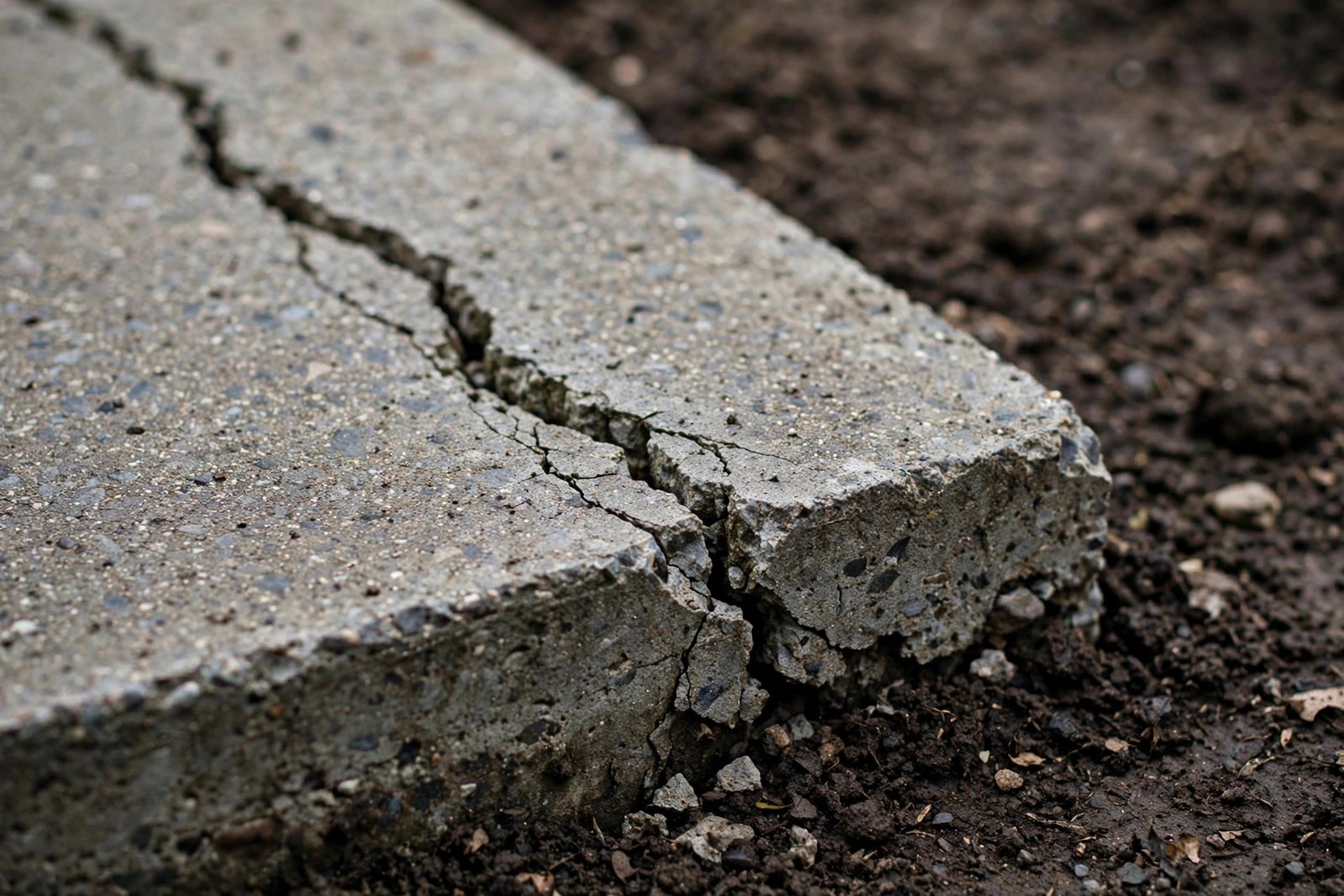
How a slab foundation carries your home
A slab-on-grade foundation is a reinforced concrete plate poured over prepared soil. The thickened edges and interior beams carry the walls; the soil below carries everything. When that soil loses support in one area or pushes harder in another, the slab bends. That uneven movement is differential settlement.
Corpus Christi homes use both conventional reinforced slabs and post-tension slabs. A conventional slab relies on reinforcing steel placed inside the concrete. A post-tension slab uses tensioned steel cables to help the slab act as one strong unit. Both can move when the clay beneath them changes moisture, but they are evaluated and repaired differently.
- We identify the slab type before planning any cutting, drilling, or pier work.
- We separate surface shrinkage cracks from cracks tied to structural movement.
- We check whether water or a plumbing leak has weakened the support below.
Warning signs that belong in the same conversation
One hairline crack by itself may be harmless. Several symptoms that line up across the same part of the house deserve a closer look.
Cracks through the floor
Tile splitting across several rooms, a crack telegraphing through flooring, or a concrete crack that is widening can mark slab movement below.
Wall and brick cracks
Diagonal drywall cracks at doors and windows, or stair-step cracks in brick, often trace back to one section settling more than the rest.
Doors that suddenly stick
When a frame goes out of square, a door rubs at the top, swings by itself, or will not latch even after adjustment.
Floors that feel off
A dip, ridge, or slope underfoot matters most when it matches cracks and frame movement in the same area of the home.
Possible under-slab leak
Warm floor spots, unexplained water use, damp flooring, or running-water sounds can point to a line leaking below the slab.
Four steps, in the right order
After twenty years around concrete foundations, the most expensive mistake I see is choosing a repair before proving the cause. We diagnose first and size the work to the actual movement.
Evaluate and map
We inspect cracks, doors, walls, drainage, and the outside slab edge, then take floor elevations to map high and low areas.
Handle the cause
If an under-slab plumbing leak is suspected, a licensed plumber should locate and repair it before structural work begins.
Repair or support
Stable cracks can be sealed. Active settlement may call for piers placed under the affected beam lines to reach dependable bearing soil.
Lift and stabilize
Where lifting is appropriate, we raise carefully—watching the structure as we go—then lock the foundation onto its new support.
Why Corpus Christi slabs struggle
The clay under much of Corpus Christi changes volume as its moisture changes. It swells after Gulf rain and shrinks through dry South Texas stretches. A slab can handle uniform movement better than uneven movement; the trouble starts when one side stays wet while another side dries out.
That pattern shows up often in newer Southside and Calallen growth areas, where fresh grading, young drainage systems, irrigation, large roof runoff, and fast-changing neighborhoods can create very different moisture conditions from one lot to the next. We read the lot along with the slab.
Dry edge, wet center
Sun and thirsty landscaping can dry perimeter soil while plumbing and interior moisture keep the center more stable.
Wet corner, dry corner
A short downspout or low grade can saturate one area while the opposite side shrinks, twisting the slab across the house.
Hidden washout
Leaking water under a slab can carry fine soil away and leave a void that the concrete eventually settles into.
New construction changes
Fill soil, drainage paths, and nearby development can alter how water moves around a newer subdivision over time.
Questions we hear at the house
Does every crack in a concrete slab need foundation repair?
No. Concrete shrinks as it cures, so narrow, stable cracks are common. The concern grows when a crack widens, changes elevation from one side to the other, keeps growing, or lines up with wall cracks, sticking doors, and measurable floor movement.
What is differential settlement?
It means one part of the slab moved more than another. A whole slab shifting evenly is less damaging than one corner dropping while the center holds. That uneven movement bends the slab and racks the walls above it.
Can an under-slab plumbing leak damage the foundation?
Yes. A pressurized water leak or failed drain line can soften soil, wash fine material away, and change moisture below the slab. Leak detection and plumbing repair come first; the slab is evaluated after the water source is controlled.
Is a post-tension slab repaired differently?
The diagnosis is similar, but work around the slab must account for tensioned cables inside the concrete. Cable locations need to be identified before drilling or cutting. Pier layout and access are planned around the slab design.
Will piers close every crack and make the house perfectly level?
The first goal is lasting support. A controlled lift can recover some elevation and may improve doors and gaps, but forcing an older structure to a perfect number can create new damage. We lift only as far as the house responds safely.
Not sure what your slab is telling you?
Show us the crack, the sticking door, or the floor that feels wrong. We will inspect the whole pattern and explain the next step in plain language.
Other foundation services
A slab problem can overlap with drainage, leveling, or deeper support. These pages explain where each service fits.
View all foundation repair services
(361) 223-0522